Sustaining Betting Capital: Mapping Strategies for Endurance in Soccer and Thoroughbred Racing Over Multiple Seasons
Mia Simmons · Aug 6, 2026
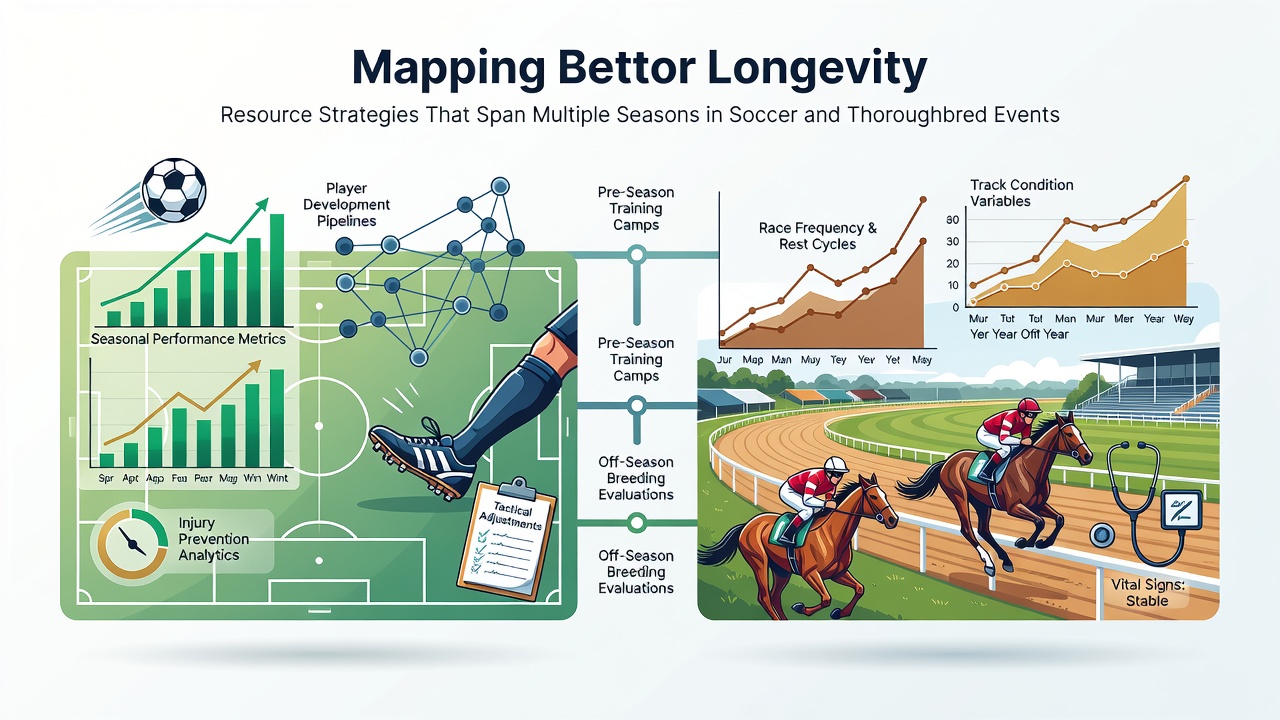
Sustaining Betting Capital: Mapping Strategies for Endurance in Soccer and Thoroughbred Racing Over Multiple Seasons
Mapping bettor longevity requires tracking how resources get allocated across extended timelines rather than isolated events, and researchers at institutions like the University of Nevada Reno have documented patterns where participants maintain positions through structured planning instead of reactive adjustments. Data from longitudinal reviews show that individuals who segment their capital into dedicated pools for soccer leagues and thoroughbred circuits often sustain activity over five or more years when they apply consistent allocation rules. Those rules typically involve fixed percentages assigned to each sport based on historical variance, with soccer drawing from lower-volatility segments during domestic league runs while thoroughbred events receive portions calibrated to meet seasonal peaks such as major festival meetings.
Resource Segmentation Across Soccer Timelines
Soccer calendars stretch across domestic leagues, cup competitions adn international windows, creating overlapping demand that forces participants to forecast needs months ahead. Studies conducted by the Canadian Centre on Substance Use and Addiction indicate that bettors who divide annual capital into quarterly tranches tied to league phases report fewer interruptions in activity compared with those who operate from a single undifferentiated pool. The segmentation process begins with an assessment of fixture density, where periods of high match volume receive smaller per-event stakes to preserve reserves for quieter intervals, and the approach extends into reserve buffers that activate only after predefined loss thresholds get crossed. Observers note that such methods align capital release with actual schedule rhythms rather than emotional responses to recent outcomes.
Thoroughbred Racing Cycle Adaptations
Thoroughbred seasons follow distinct regional calendars that include breeding breaks, weather-related disruptions and graded race concentrations, all of which influence how resources flow between events. Reports compiled by the Australian Gambling Research Centre reveal that participants who maintain separate ledgers for flat and jumps campaigns achieve longer participation spans because they avoid cross-contamination of funds when one discipline enters a lull. Allocation formulas in these cases often incorporate historical strike rates per track and distance category, with adjustments made at the start of each new campaign rather than mid-stream. The result is a rolling reserve system that replenishes after major meetings and contracts ahead of known off-periods, allowing continuity without sudden capital injections.
Cross-Sport Integration Techniques
Integration between soccer and thoroughbred activities demands synchronized calendars that account for timing conflicts, such as European league weekends coinciding with Australian or American race days. Analysts from the National Opinion Research Center at the University of Chicago have tracked cohorts where joint resource maps produced higher survival rates over multi-year horizons because participants could shift marginal allocations between the two domains when one experienced extended downtime. The mapping process relies on shared performance indicators like return-on-stake averages calculated across equivalent time blocks, which then inform percentage transfers. Those transfers remain capped to prevent one sport from depleting the overall structure, and the caps get reviewed annually using aggregated outcome data rather than individual streaks.
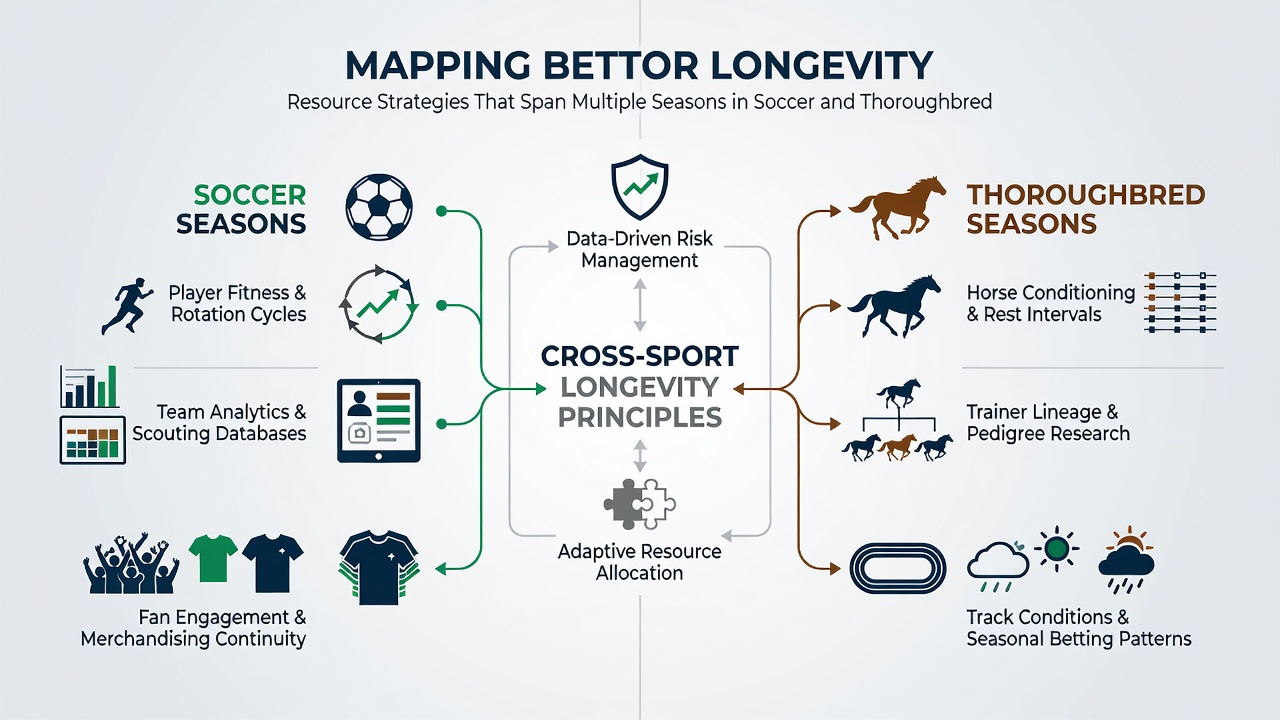
As of August 2026, updated industry compilations show continued emphasis on these segmented approaches, with several jurisdictions reporting stable participation metrics among operators that publish educational materials on long-cycle planning. The data further suggest that bettors who incorporate external benchmarks, such as average field sizes in thoroughbred events or squad rotation statistics in soccer, refine their maps more effectively than those who rely solely on personal records. External benchmarks provide objective anchors that counteract the tendency to over-allocate after short-term clusters of favorable results.
Implementation Patterns Observed in Practice
Practical examples drawn from regulatory filings and academic case collections illustrate how the mapping process unfolds. One documented group maintained three distinct accounts: a core soccer ledger refreshed at the opening of each Premier League window, a thoroughbred ledger aligned with Northern Hemisphere flat seasons, and a joint contingency ledger accessed only when both primary accounts fell below preset floors. The structure required quarterly reconciliations that compared actual drawdowns against projected curves, and the reconciliations triggered rebalancing only when deviations exceeded ten percent. Such discipline kept overall capital trajectories within sustainable bands across eight consecutive seasons according to the compiled records.
Another pattern involves the use of rolling averages rather than fixed budgets, where allocations for upcoming months derive from the trailing twelve-month return rate adjusted for known schedule changes. The method, referenced in reports from the European Association for the Study of Gambling, allows gradual adaptation to shifting market conditions without abrupt cuts or expansions. Participants apply the averages uniformly across both soccer and thoroughbred segments, which reduces the risk of one sport absorbing disproportionate resources during its peak period.
Conclusion
Longevity in these domains ultimately rests on the consistent application of segmented resource maps that respect the separate rhythms of soccer leagues and thoroughbred calendars while maintaining cross-checks between the two. Data accumulated through multiple research channels demonstrate that participants who embed annual reviews and external benchmarks into their processes record extended activity spans compared with those who treat each season as an isolated exercise. The mapping itself functions as a living document updated at fixed intervals, ensuring that capital allocation remains aligned with actual fixture demands rather than accumulated momentum from prior cycles.